


Stockholm, Sweden – April 2026
Is game meat healthier than beef — nutrition guide and facts
A guide from Tendy — hunting technology for modern game meat handling
In recent years, game meat has gone from being hunters' secret resource to becoming sought after by the broader food-interested public. Much of this demand is driven by the intuition that meat from wild animals is "cleaner" or "healthier" than industrially farmed meat. This guide reviews what nutritional research actually says, what is myth and what is fact, and why increased use of Swedish game meat is good for both health and the environment.
Nutritional content — game meat vs beef
In most objective nutritional measures, game meat has an advantage compared to regular beef. The differences are not dramatic, but they consistently go in the same direction: game meat has lower fat content, a higher proportion of healthy fat, higher protein content, and generally higher levels of several important minerals.
A typical comparison per 100 grams of raw meat (approximate values that vary depending on the cut and animal size):
- Moose meat: about 120 kcal, 22 g protein, 2–3 g fat (of which only 1 g is saturated)
- Roe deer meat: about 110 kcal, 21 g protein, 2 g fat
- Wild boar meat: about 130 kcal, 22 g protein, 3–4 g fat
- Beef (round): about 160–180 kcal, 20–21 g protein, 6–10 g fat (of which 3–4 g is saturated)
- Beef (ribeye): about 280 kcal, 18 g protein, 22 g fat (of which 10 g is saturated)
Fat quality — the real difference
The most significant health difference between game meat and industrial beef lies not in the amount of fat but in the quality of the fat. Wild animals that eat natural grass, herbs, acorns, and twigs have a completely different fat composition than animals fed with concentrated feed and grains.
Game meat contains more omega-3 fatty acids relative to omega-6. A typical ratio between omega-6 and omega-3 is around 2:1 to 4:1 for game, compared to 10:1 or higher for conventionally raised beef. This type of balanced fat composition is rare in modern Western diets, where omega-6 dominates.
Game meat is also rich in conjugated linoleic acid (CLA), a fatty acid studied for its potential health benefits. Levels of CLA are generally higher in meat from grass-eating and grazing animals than from animals fed with grains.
Minerals and vitamins
Game meat is an excellent source of several minerals that many people are deficient in. The iron content is higher than in beef, and the iron found in game meat is largely heme iron, the form that the human body absorbs most efficiently. This makes game meat especially valuable for people with iron deficiency — not least women of childbearing age.
The zinc content is also high. Zinc is important for the immune system, wound healing, and the hormonal system, and deficiency is more common than one might think. A moderate portion of moose meat covers a significant part of the daily requirement.
B vitamins, especially B12, are found in abundant amounts. B12 is a nutrient that only naturally occurs in animal foods, and one portion of game meat per week covers the weekly requirement for an adult.
What you should consider — cesium and lead
Game meat is generally clean and unwanted substances are rarely a problem with normal consumption. However, there are two specific things to be aware of.
Radioactive cesium-137 still occurs in wild boar from certain parts of Sweden, as a result of the fallout after the Chernobyl accident in 1986. Cesium-137 has a physical half-life of about 30 years and remains in the soil in fallout-affected areas, especially in forest environments where mushrooms (especially deer truffles) concentrate it and the wild boars then eat the mushrooms. The limit in Sweden is 1,500 Bq/kg, and wild boars hunted in listed municipalities according to LIVSFS 2024:6 must be analyzed and approved before the meat can be sold as food.
Lead fragments from ammunition can occur in the immediate vicinity of the wound channel. The recommendation is to cut away the meat closest to the wound channel (with a generous margin) and not serve that part to children or pregnant women. Many hunters today use lead-free ammunition precisely to avoid the problem.
Other substances — heavy metals in general, antibiotic residues, hormones — are not a problem in game meat. Wild animals eat natural food, receive no medication, and do not live in cramped spaces where stress affects meat quality. In that respect, game meat is often cleaner than industrial meat production.
Environmental aspects — often underestimated
Game meat from Swedish hunting has a climate impact that is dramatically lower than conventional meat production. The animals live on natural food in existing ecosystems, require no feed cultivation, no energy consumption for barns, and no medication. The climate impact that exists is basically only in the form of transporting the meat from the hunted location to the plate — and with local consumption, even that is minimal.
Additionally, hunting serves an ecological function. In Sweden, moose and wild boar are two of the species that most affect forestry and agriculture, and without regulated culling, the population sizes would create significant economic and ecological problems. Eating game meat is practically participating in sustainable wildlife management.
How to get the most out of game meat — the quality lies in the handling
The health benefits of game meat are based on the meat being well cared for. Poorly handled game meat — with too warm aging, careless butchering, or poor freezing — loses both taste, texture, and nutritional value. That is why Tendy was founded: to give the average Swedish hunter the same professional tools that commercial butchers use.
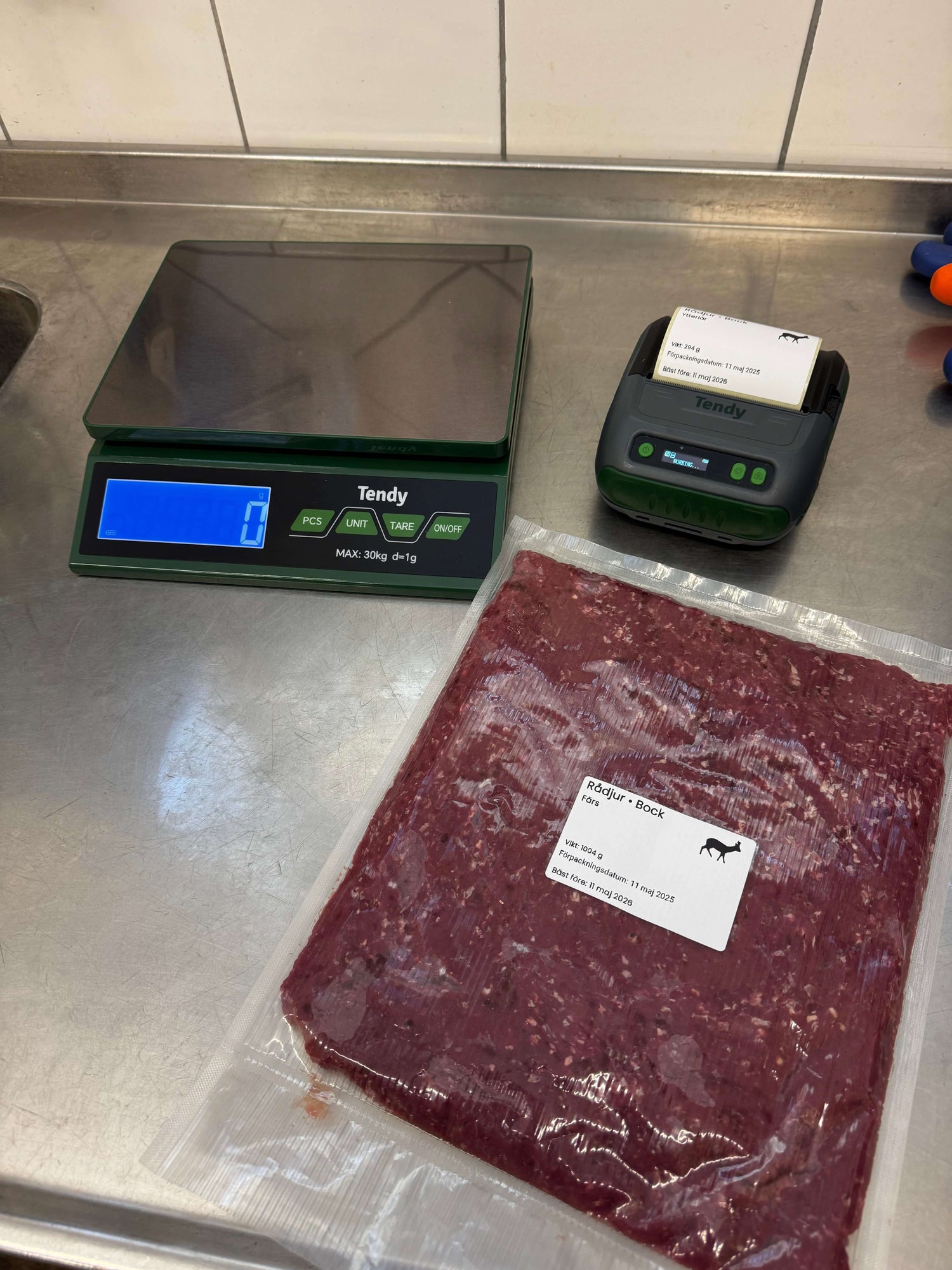
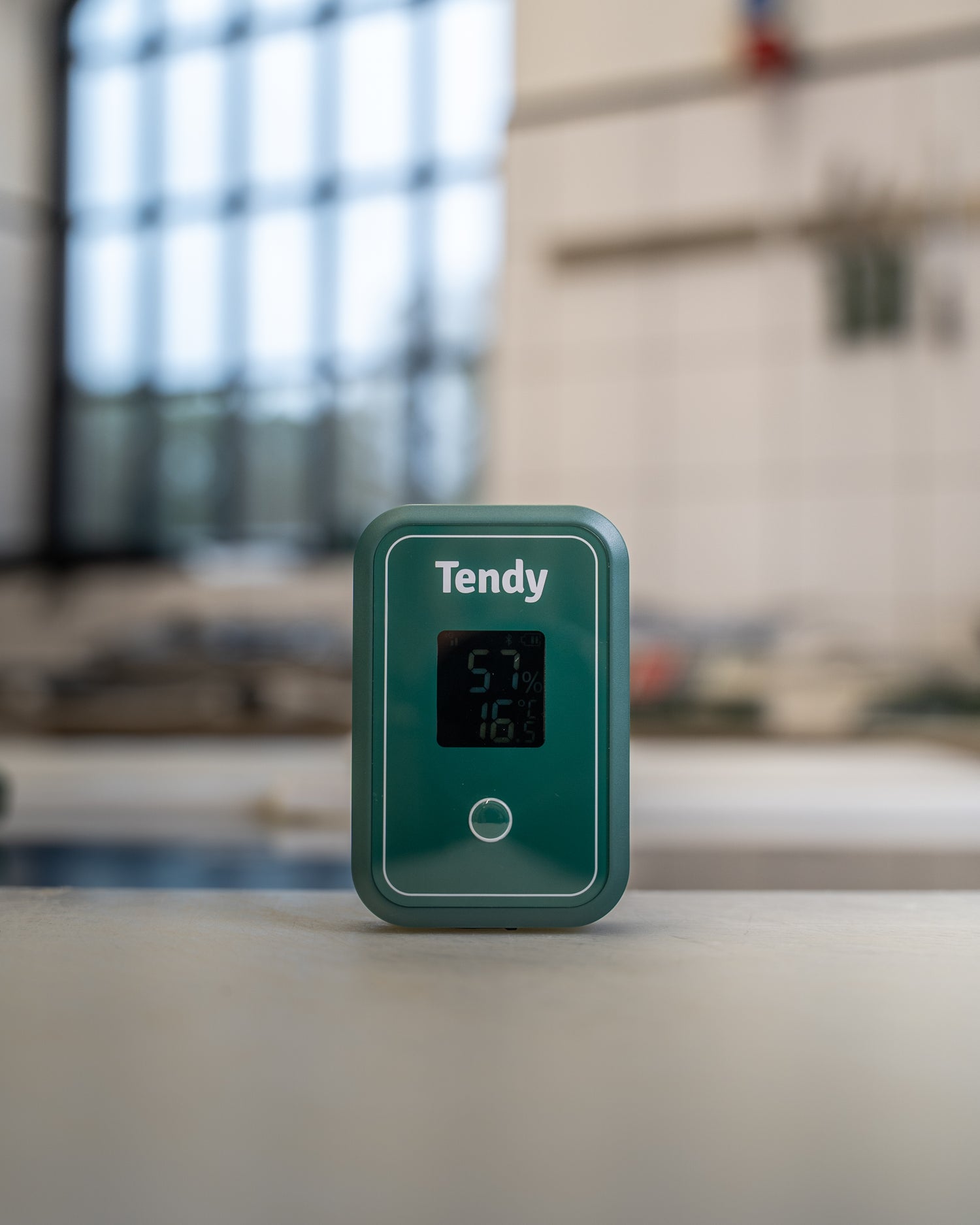
With Tendy Nemus or Lucus 4G aging timer you ensure that the aging takes place at the right temperature. With Tendy Libra and Fluctus you get the weighing done correctly. With Tendy Scriptor you get professional labeling. And with Tendy's BPA-free vacuum bags the meat maintains quality in the freezer for 2–3 years instead of getting freezer burn after six months.
All of this affects not only taste and yield — it also affects how much of the nutritious meat you have hunted actually ends up on the plate instead of being thrown into the organic waste.
Game meat in practice — use in different contexts
One reason game meat is not eaten more in Sweden is that many people feel unsure about how to cook it. It is not the same as beef — the flavors are more intense, the fat is less, and the texture can be dry if the meat is handled incorrectly. Here are some practical tips:
Moose and red deer work excellently as steak, fillet, roast, and stew meat. The internal temperature should be lower than beef — 55–58 °C for medium-rare steak is a good starting point. Because the meat is leaner, combinations with fat (bacon, butter, cream) usually work better than healthy lean cooking methods.
Roe deer has the finest grain of Swedish large game and is often taken in its elegant form: whole roasted fillet, short cooking times, minimal seasoning. Cook to an internal temperature of 60–63 °C.
Wild boar has a stronger character and often ends up in sausages, pasta, and stews. The internal temperature should be 65–68 °C — this is a safety margin against trichinae (which die at 67 °C for two minutes), even though the meat should already have been analyzed and approved.
Heart, liver, and tongue are often overlooked parts that are full of nutrients — iron, B vitamins, zinc. A simple stew of moose or reindeer heart provides a super-concentrated portion of nutrition.
Game meat as part of sustainable food culture
Interest in locally produced, sustainable food has increased dramatically in recent years. Game meat fits perfectly into that trend — it is local (often coming from the forest just a few miles from the dining table), it is ethically justifiable (the animals have lived natural lives and hunting is regulated by management plans), and it contributes to ecological balance.
There is also value in the fact that game meat makes food culture more seasonal. The moose season in autumn, the wild boar which can be hunted year-round but is often processed after summer growth, the roe deer which is often taken after winter hunting — each animal has its natural rhythm, and participating in that connects us back to a food culture where food and season go hand in hand. Game meat is generally clean and unwanted substances are rarely a problem with normal consumption. However, there are two specific things to be aware of.
Radioactive cesium-137 still occurs in wild boar from certain parts of Sweden, as a result of the fallout after the Chernobyl accident in 1986. Cesium-137 has a physical half-life of about 30 years and remains in the soil in fallout-affected areas, especially in forest environments where mushrooms (especially deer truffles) concentrate it and the wild boars then eat the mushrooms. The limit in Sweden is 1,500 Bq/kg, and wild boars hunted in listed municipalities according to LIVSFS 2024:6 must be analyzed and approved before the meat can be sold as food.
Lead fragments from ammunition can occur in the immediate vicinity of the wound channel. The recommendation is to cut away the meat closest to the wound channel (with a generous margin) and not serve that part to children or pregnant women. Many hunters today use lead-free ammunition precisely to avoid the problem.
Other substances — heavy metals in general, antibiotic residues, hormones — are not a problem in game meat. Wild animals eat natural food, receive no medication, and do not live in cramped spaces where stress affects meat quality. In that respect, game meat is often cleaner than industrial meat production.
How to get the most out of game meat — the quality lies in the handling
The health benefits of game meat are based on the meat being well cared for. Poorly handled game meat — with too warm aging, careless butchering, or poor freezing — loses both taste, texture, and nutritional value. That is why Tendy was founded: to give the average Swedish hunter the same professional tools that commercial butchers use.
With Tendy Nemus or Lucus 4G aging timer you ensure that the aging takes place at the right temperature. With Tendy Libra and Fluctus you get the weighing done correctly. With Tendy Scriptor you get professional labeling. And with Tendy's BPA-free vacuum bags the meat maintains quality in the freezer for 2–3 years instead of getting freezer burn after six months.
All of this affects not only taste and yield — it also affects how much of the nutritious meat you have hunted actually ends up on the plate instead of being thrown into the organic waste.
Game meat in practice — use in different contexts
One reason game meat is not eaten more in Sweden is that many people feel unsure about how to cook it. It is not the same as beef — the flavors are more intense, the fat is less, and the texture can be dry if the meat is handled incorrectly. Here are some practical tips:
Moose and red deer work excellently as steak, fillet, roast, and stew meat. The internal temperature should be lower than beef — 55–58 °C for medium-rare steak is a good starting point. Because the meat is leaner, combinations with fat (bacon, butter, cream) usually work better than healthy lean cooking methods.
Roe deer has the finest grain of Swedish large game and is often taken in its elegant form: whole roasted fillet, short cooking times, minimal seasoning. Cook to an internal temperature of 60–63 °C.
Wild boar has a stronger character and often ends up in sausages, pasta, and stews. The internal temperature should be 65–68 °C — this is a safety margin against trichinae (which die at 67 °C for two minutes), even though the meat should already have been analyzed and approved.
Heart, liver, and tongue are often overlooked parts that are full of nutrients — iron, B vitamins, zinc. A simple stew of moose or reindeer heart provides a super-concentrated portion of nutrition.
Game meat as part of sustainable food culture
Interest in locally produced, sustainable food has increased dramatically in recent years. Game meat fits perfectly into that trend — it is local (often coming from the forest just a few miles from the dining table), it is ethically justifiable (the animals have lived natural lives and hunting is regulated by management plans), and it contributes to ecological balance.
There is also value in game meat making food culture more seasonal. The moose season in autumn, the wild boar that can be hunted year-round but is often processed after summer growth, the roe deer that is often taken after the winter hunt — each animal has its natural rhythm, and participating in that connects us back to a food culture where food and season go hand in hand. Tendy's broader mission is to help make Swedish game meat more accessible. Not just for hunting families, but for restaurants, farm shops, and the cooking public looking for alternatives to industrially raised meat. For that to happen, quality, traceability, and labeling must be world-class — and that is what we build our products for.
How Tendy helps you
Tendy's mission is to make Swedish game meat a more widely commercially available resource — better handled, better labeled, and better packaged. For you as a hunter, this means that more of what you harvest reaches the table in top condition. Download the Tendy app for free and get started with the same tools that professional butchers use.
Note — the rules described apply to Sweden
Information about cesium-137 contamination in wild boar is relevant for all of Europe but affects different geographical areas depending on the fallout pattern after the Chernobyl accident in 1986. In Sweden, it mainly concerns parts of Västmanland, Uppsala, and Gävleborg counties according to the list in LIVSFS 2024:6. In Germany, it is primarily Bavaria and Baden-Württemberg that have elevated levels, in Austria certain parts of Lower Austria and Styria, and in Italy some alpine regions. The Swedish National Food Agency's limit of 1,500 Bq/kg for game meat applies in Sweden — other countries may have partly different limits (the EU's common trade limit is 600 Bq/kg, but Sweden has a higher national limit for game). The lead advice on bullet cleaning is also from the Swedish National Food Agency, but the underlying health risks are universal.
Sources
- Swedish National Food Agency — Radioactive cesium in wild boar, questions and answers
- Swedish National Food Agency — Lead in game meat and advice on the use of lead ammunition
- Swedish National Food Agency regulations LIVSFS 2024:6
- Fritzson, K. (2013): Radioactive cesium in wild boar — variables affecting cesium-137 levels in wild boar (Sus scrofa). Uppsala University/SLU.
- National Veterinary Institute — Special training in hygienic slaughter of wild boar
- Swedish Radiation Safety Authority — map of cesium-137 fallout in Sweden (updated 2024-04-25)
Tendy | tendy.se