


How long does vacuum-packed game meat last?
Most frequently asked question
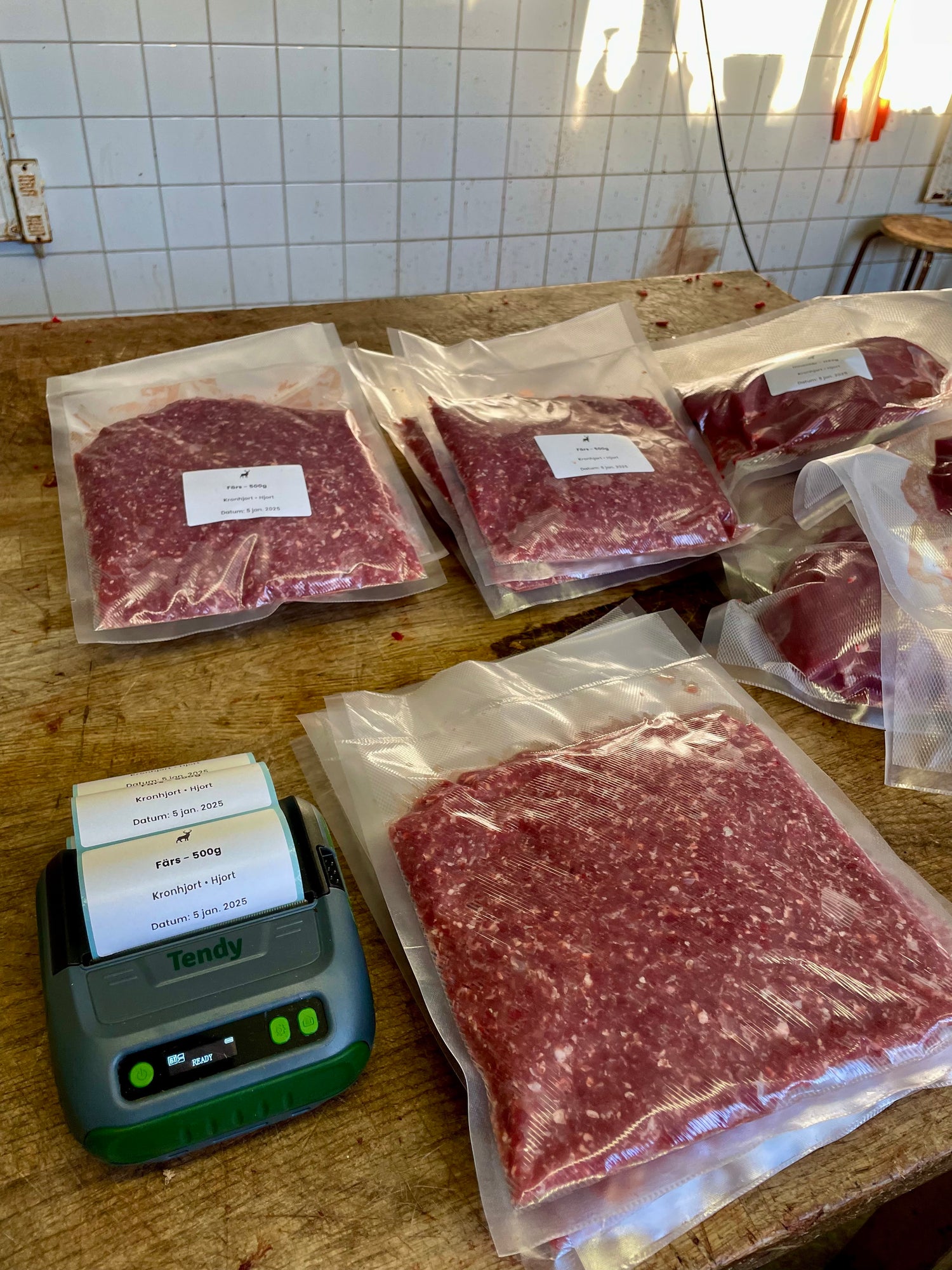
One of the most frequently asked questions from hunters is about shelf life: "Can I eat this wild boar meat from 2022?". The answer depends on how it has been packaged, at what temperature it has been stored, and the animal species. This guide provides exact shelf life times for vacuum-packed game meat under different storage conditions and explains what actually happens to the meat over time. With Tendy's BPA-free vacuum bags and the Tendy app's journal function, you always know how old your meat is.

What actually happens when meat is stored
Even properly frozen meat ages — it involves two different processes happening simultaneously. The first is oxidation, where the oxygen in the air reacts with the fat in the meat and breaks it down. The fat becomes rancid, the taste unpleasant, and the nutritional value decreases. Oxidation is slow in the freezer but continues as long as oxygen is near the meat.
The second process is dehydration — water migrates from the surface of the meat to the cold surfaces of the freezer, where it freezes as frost. The meat becomes increasingly dry, and the dry areas lose their color and texture. This is the phenomenon we recognize as freezer burn.
Vacuum packaging dramatically slows down both processes. Without oxygen (or at least with a minimal amount), oxidation cannot start, and without air around the meat, there is no space for water to migrate to. Tendy’s BPA-free vacuum bags have an oxygen permeability that allows the meat to remain intact for several years.
How to maximize durability
The right bag for the right meat
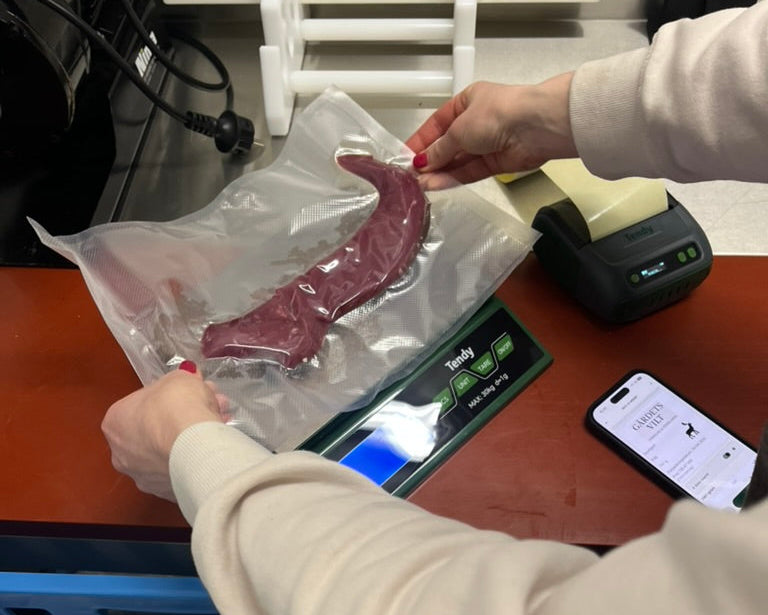
Tendy's BPA-free vacuum bags come in 22×30 cm and 25×35 cm sizes. Choose the size based on the cut of meat — a bag that is too large leaves unnecessary plastic around the meat and creates more potential points where the vacuum can be broken. A bag that is too small can crack during freezing or fail to maintain the vacuum. Thickness (70+ microns) is important: cheap bags at 30–50 microns allow oxygen to pass through over time even when the seal is intact.
Flat freezing
Place the vacuum bags flat in the freezer during the first day. Flat packages freeze more evenly, take up less space in the freezer, and thaw faster and more evenly when used. After the meat is completely frozen, it can be stored upright to save space.
Stable freezing temperature
The goal is −18 °C or colder, consistently. Repeated thawing and refreezing — even small, like when you open the freezer and search for a specific piece — stresses the meat and shortens its shelf life. Keep a freezer thermometer in the freezer and avoid leaving the door open longer than necessary.
Shelf life per animal species and packaging method
The following times apply for storage in a freezer at −18 °C or colder. The times are conservative — meat often keeps better than stated, but for safety and quality assurance, these are the guidelines you can rely on.
Moose meat
Vacuum-packed: whole muscle cuts 2–3 years, stew pieces 18–24 months, ground 12–15 months. Without vacuum (regular freezer bag): muscle cuts 8–12 months, stew pieces 6–8 months, ground 3–4 months. The difference between vacuum and regular packaging is about a factor of 3–4 in shelf life for moose.
Roe deer meat
Vacuum-packed: whole muscle cuts 18–24 months, stew pieces 12–18 months, ground 9–12 months. Without vacuum: muscle cuts 6–9 months, stew pieces 4–6 months, ground 2–3 months. Roe deer has a somewhat shorter shelf life than moose due to the more delicate muscle structure and lower fat content.
Wild boar meat
Vacuum-packed: whole muscle cuts 12–18 months, stew pieces 8–12 months, ground 6–9 months. Without vacuum: muscle cuts 4–6 months, stew pieces 3–4 months, ground 1–2 months. The higher fat content and different fat structure of wild boar cause it to age faster than leaner game — the fat is more prone to rancidity.
Red deer and fallow deer
About the same shelf life as moose. Vacuum-packed: whole muscle cuts 2 years, stew pieces 18 months, ground 12 months. Deer meat is very durable.
Game sausage, smoked and salted
Processed game meat has a different shelf life than raw meat. Cold-smoked game sausage keeps 6–12 months in the refrigerator at +4 °C and 1–2 years in the freezer. Air-dried products can last even longer but are sensitive to mold if the humidity is wrong.
Signs that the meat has started to age
How do you know if the meat is still in good condition? Here are the most important signs to look for, in order from earliest to most serious.
Color changes: vacuum-packed red meat is naturally darker than air-exposed meat — this is not an indicator of aging. However, if the meat has brownish or gray spots that do not return to red after a few minutes in the air, it is a sign of oxidation.
Freezer burn: white, dry areas on the surface. In mild cases, they can be cut away; in severe cases, the quality is so reduced that the meat is more suitable for animal feed than human consumption.
Weakened vacuum: if the bag has become loose or air has entered around the meat, the vacuum is broken and oxidation is occurring. Use the meat quickly or re-vacuum it.
Rancid smell: an old, slightly spicy or metallic smell indicates that the fat has oxidized. The meat is not dangerous but the taste is impaired. Best suited for stews or as an ingredient in spicy sausages where the flavor is masked.
Sour or rotten smell: indicates microbial growth — either the vacuum was broken during storage or the meat was packed without being cooled sufficiently. Discard the meat.
Note — the rules described apply to Sweden
The shelf life times in this article are based on generally accepted food science guidelines and apply in all EU countries. Specific recommendations from the Swedish Food Agency may differ slightly from corresponding recommendations from other countries' food authorities (for example BVL in Germany or AGES in Austria), but the basic principles for vacuum packaging and freezer storage are universal.
Sources
- EU Regulation (EC) No 852/2004 on food hygiene
- The Swedish Food Agency — regulations for food businesses in primary production
- The National Veterinary Institute — Special training in hygienic slaughter of wild boar
- Generally accepted food science guidelines for frozen storage
- Tendy's product documentation for BPA-free vacuum bags
Tendy | tendy.se