


Stockholm, Sweden – April 2026
Label printer for meat — what should you consider when buying
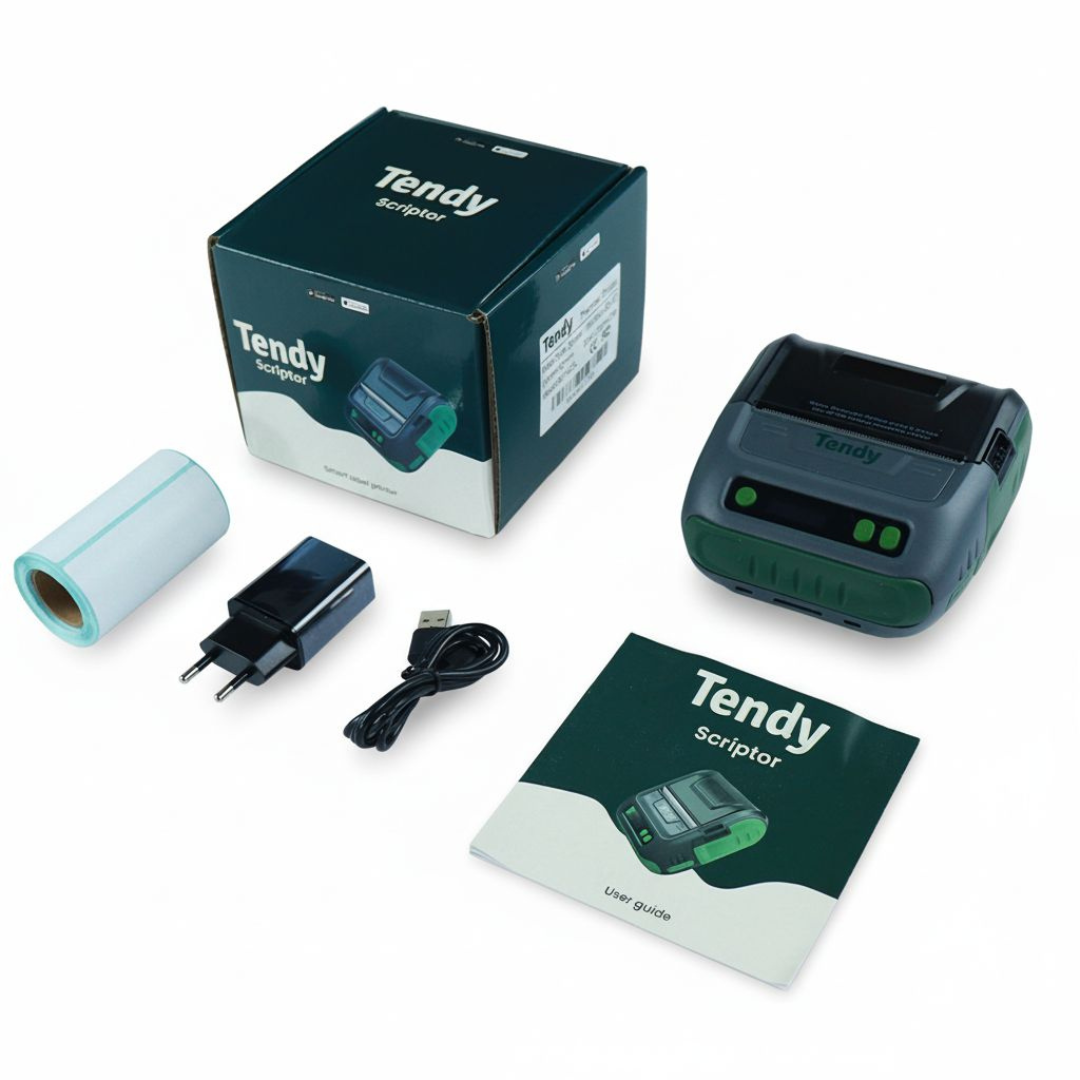
A label printer can make the difference between meat that looks homemade and meat that looks like it comes from a professional butcher. But the market is confusing — there are everything from cheap office printers to industrial thermal printers, and few of them are designed for the specific situation of labeling meat in a hunting team’s kitchen. This guide goes through what you actually need, which pitfalls to avoid, and why the Tendy Scriptor is built specifically for hunters and small-scale butchers.
Why a regular printer is not enough
A regular office printer technically works for printing labels, but in practice, it is the wrong tool for meat handling. An A4 sheet of labels requires you to sit at a computer, fill in information, format, and print — which becomes an administrative process that is rarely kept updated in real time. When you are in the slaughterhouse with your hands full, you don’t want to have to go start the computer.
Moreover, inkjet printing is sensitive to both moisture and grease. A label printed with inkjet can become illegible after just a few months in the freezer, especially if the bag condenses or if there is grease on the outside. Laser printing holds up better, but the wax from the toner can come off with repeated temperature changes.
This is why thermal label printers have become standard in industries that handle meat, fish, and frozen foods. Thermal printing produces black text through a heat reaction directly on the label paper — no ink, no toner. The result is indestructible by moisture, freezing, and normal user wear.
This is what a good meat label printer should be able to do
Thermal printing technology
Thermal printers use heat instead of ink. This offers two major advantages: the labels are indestructible in freezing and moisture, and you don’t have to buy ink cartridges. The cost per label is a fraction of what an inkjet solution costs in the long run. Tendy Scriptor uses thermal technology and prints on water-resistant label rolls.
Wireless connection via Bluetooth
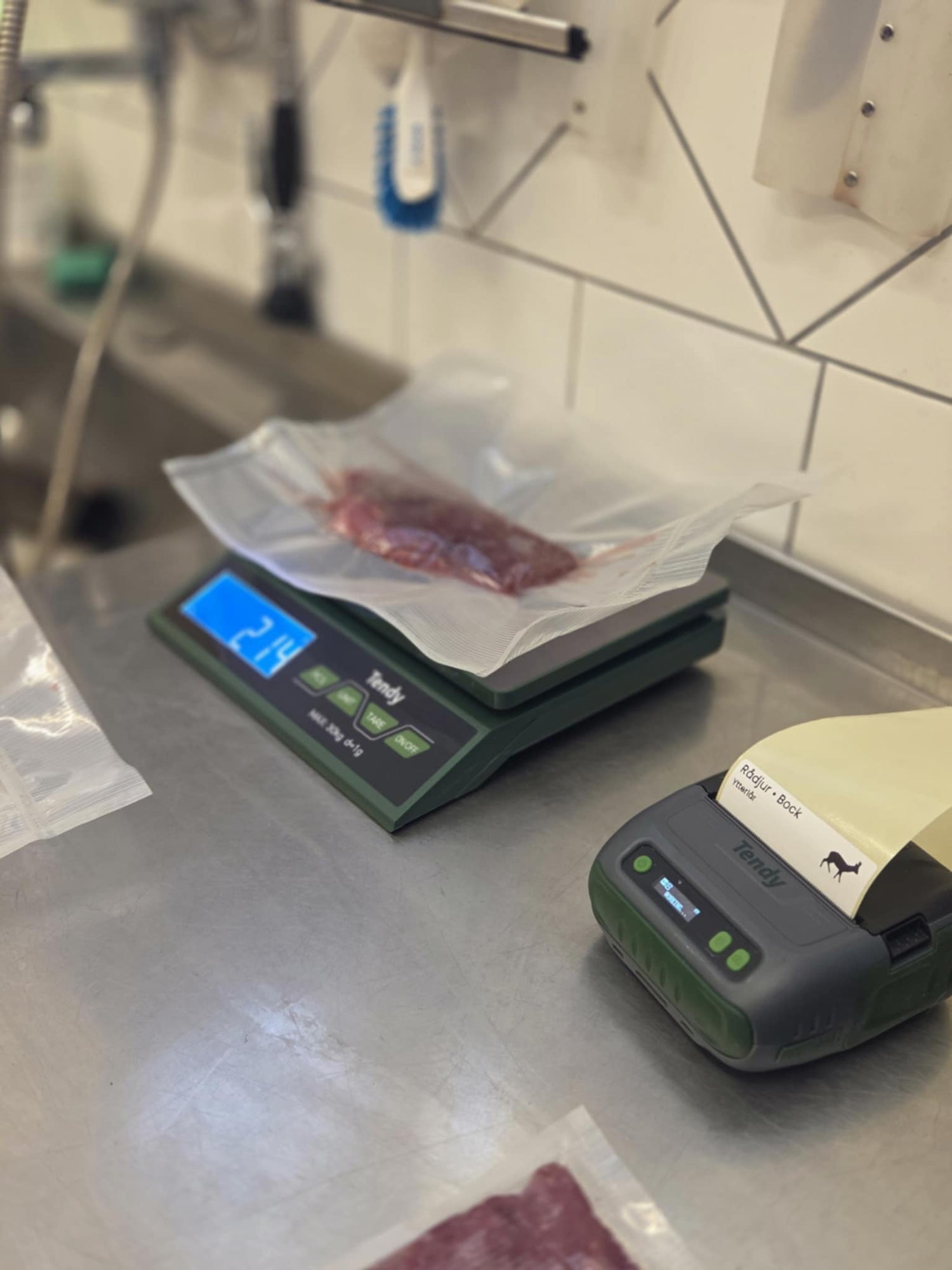
The cable from the computer to the label printer is a limitation you don’t want in a slaughterhouse. Modern meat label printers are wireless and connect to a mobile app via Bluetooth. This way, you can stand wherever you want, select the animal and cut on your phone, and have the label printed immediately. Scriptor syncs directly with the Tendy app.
App integration and digital log
A printer that only prints is half-finished. A printer that fetches data directly from your hunting log — animal name, serial number, date of kill, weight from the scale — is a complete solution. This is the whole point of the Tendy system: Scriptor, Libra, Fluctus, and Nemus/Lucus are connected through the same app, so no information is entered manually twice.
Label quality and format
The size of the labels should match your most common packages. Standard widths up to 80 mm work well for vacuum bags in 22×30 or 25×35 cm. The label paper should be approved for food contact and withstand freezer storage down to −20 °C.
Durability in field conditions
The printer must withstand blood, water, cold, and handling with gloves on. Cheap office printers die after a few seasons in a slaughterhouse, while industrial printers last for decades. Tendy Scriptor is designed for the reality of Swedish slaughterhouses.
Sources
• The Swedish Food Agency's regulations LIVSFS 2024:6
• EU Regulation (EC) No 853/2004 on hygiene rules for food of animal origin
• EU Regulation (EU) No 1169/2011 on food information to consumers
• Tendy's product documentation for Scriptor